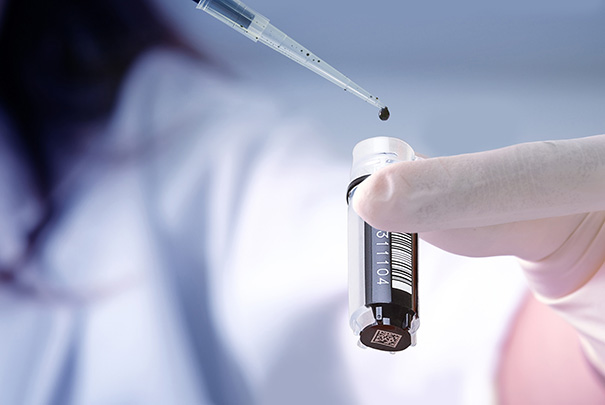
When protecting valuable biological samples for months, years, or even decades, storage temperature is often one of the first considerations. But what about the tube actually holding the sample?
As laboratories and biobanks face continued pressure to control operating costs, there is an increasingly broad choice of sample storage consumables available at different price points. Storage tubes may look virtually identical from one supplier to another, but appearance alone tells us very little about how they will perform over the long term.
Small differences in manufacturing precision, sealing performance, material composition, or durability may only become apparent after repeated handling, transportation, or prolonged exposure to ultra-low temperatures. By then, the sample itself may already be at risk.
Looking Beyond Appearance: Fit, Form and Function
One way to evaluate long-term storage labware more systematically is through three established engineering principles: fit, form and function.
Form: Is it manufactured consistently?
Small dimensional differences can affect how a tube interacts with its cap, automated equipment, racks, and other components. Consistency becomes particularly important when hundreds or thousands of samples are being processed through automated workflows.
Even subtle variation in internal geometry, sealing surfaces, or cap engagement points can provide an early indication of potential performance issues.
Fit: Will the seal continue to perform?
A tube and cap must create a reliable seal not just once, but throughout the expected life of the sample.
Capping torque, thread durability, pressure resistance, and performance following repeated use all matter. A tube that performs as expected during routine handling may behave very differently after transportation, repeated cap/decap cycles, or exposure to ultra-low temperatures.
In comparative testing of commercially available storage tubes, differences emerged in torque consistency, thread durability, seal integrity, and sample retention following repeated freeze–thaw cycles.
Function: Could the material itself affect the sample?
Physical integrity is only part of the equation.
The polymer used to manufacture a storage tube, and the additives or contaminants it contains, can potentially interact with the sample. Extractables and leachables are particularly important considerations for sensitive downstream applications such as genomics, proteomics, biomarker analysis, and regulated workflows.
Comparative GC-MS testing demonstrated that storage tubes that appear physically similar can have different chemical profiles, reinforcing the importance of looking beyond external appearance when qualifying labware.
Qualification Should Reflect Real-World Use
There is no single test that determines whether a storage tube is suitable for every application. Instead, laboratories should consider the conditions the tube will encounter throughout the complete sample lifecycle.
Will the sample undergo repeated freeze–thaw cycles? Will it be transported by air? Will tubes be capped and decapped manually or automatically? How long will samples remain in storage? Are downstream assays particularly sensitive to extractables, leachables, or adsorption?
The answers can significantly change what constitutes appropriate storage labware.
The True Cost of Long-Term Sample Storage
Purchase price is understandably an important consideration when selecting consumables, but it shouldn't be considered in isolation.
The storage tube is part of the sample management system itself. Dimensional consistency, sealing reliability, mechanical durability, chemical purity, and traceability can all influence whether a sample remains usable throughout its intended lifetime.
A structured qualification process based on fit, form and function can help laboratories look beyond apparent similarities and make more informed decisions based on the performance characteristics that matter for their samples and workflows.
Want to See the Data?
Azenta Life Sciences put commercially available long-term storage tubes through a series of engineering and analytical assessments, examining dimensional consistency, mechanical performance, seal integrity, freeze–thaw resilience, and extractables and leachables.
The full technical note explores the testing methodology and results in greater detail, providing practical considerations for evaluating long-term sample storage labware.
Download the Technical Note
Explore FluidX Sample Storage Tubes
Looking for long-term sample storage solutions for your workflow? Explore the FluidX® range from Azenta Life Sciences, available through Thomas Scientific.
Explore the FluidX Range