In cell culture, small inconsistencies can lead to big problems. From variability in cell growth rates to skewed assay results, even minor fluctuations in environmental conditions—like gas exchange, humidity, or sterility—can introduce unwanted noise. Whether you're working in academic research, biotechnology, or drug discovery, improving the consistency of your cell culture conditions is key to achieving reproducible, high-quality data.
Common Challenges That Undermine Cell Culture Consistency
Even in well-equipped labs, researchers often face issues like:
- Uneven cell growth across multi-well plates, often due to edge effects or variable evaporation.
- Contamination risks when plates are not properly sealed or handled.
- Inconsistent gas exchange, which can affect pH and metabolic performance inculture media.
- Evaporation during long-term incubation, leading to osmotic stress or nutrient concentration.
All these factors can compromise cell health, assay performance, and data integrity—especially in high-throughput or long-term experiments.
Strategies for Enhancing Reliability in Cell Culture
To minimize variability and optimize reproducibility, researchers can adopt the following best practices:
- Standardize cell seeding and media preparation across experiments and technicians.
- Use plates with low-evaporation design or edge-buffering techniques for multi-well formats.
- Maintain a humidified incubator with stable CO2 and temperature to supportoptimal cell growth.
- Seal plates with breathable films that allow gas exchange without exposing wellsto contamination or evaporation.
This last point— the choice of sealing film — is often overlooked but critically important.
The Role of Sealing Films in Cell Culture Consistency
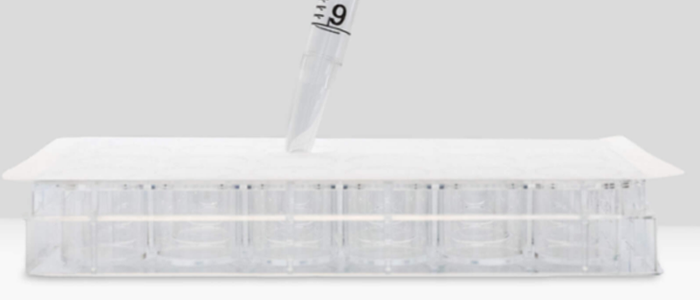
The right sealing film can serve as both a physical barrier and a functional component of your experimental system. Breathable sealing films are particularly important for maintaining sterility while still allowing the gas exchange necessary for aerobic cell lines. A poor seal can lead to:
- Desiccation of edge wells
- Uneven growth conditions
- Cross-contamination between wells
- Inconsistent assay results
A Proven Solution: AeraSeal™ Sealing Film by Excel Scientific
For labs looking to enhance consistency and reduce variability in their cell culture workflows, AeraSeal™ Sealing Film from Excel Scientific offers a validated solution.
- Gas Permeable: Allows essential O2 and CO2 exchange for mammalian andmicrobial cultures.
- Sterile and non-cytotoxic: Ideal for sensitive experiments including viraltransfections and gene expression assays.
- Strong, Residue-Free Adhesion: Maintains seal integrity while enabling cleanremoval for downstream analysis.
- Compatible with 96- and 384-well plates, making it perfect for high-throughputand long-term studies.
Many researchers choose AeraSeal™ for hybridoma development, immunoassays, and continuous cell line work where both sterility and breathability are crucial.